“An ecosystem is defined as a community of lifeforms in concurrence with non-living components, interacting with each other.”
What is an Ecosystem?
An ecosystem is a structural and functional unit of ecology where the living organisms interact with each other and the surrounding environment. In other words, an ecosystem is a chain of interactions between organisms and their environment. The term “Ecosystem” was first coined by A.G.Tansley, an English botanist, in 1935.
Read on to explore the structure, components, types and functions of the ecosystem in the notes provided below.
Structure of the Ecosystem
The structure of an ecosystem is characterised by the organisation of both biotic and abiotic components. This includes the distribution of energy in our environment. It also includes the climatic conditions prevailing in that particular environment.
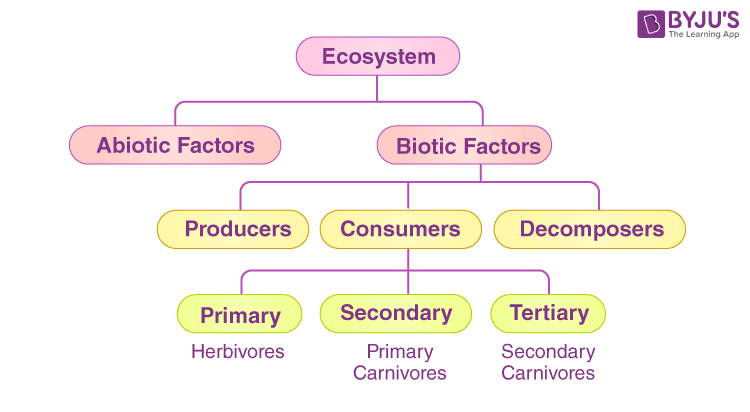
The structure of an ecosystem can be split into two main components, namely:
Biotic Components
Abiotic Components
The biotic and abiotic components are interrelated in an ecosystem. It is an open system where the energy and components can flow throughout the boundaries.
Biotic Components
Biotic components refer to all living components in an ecosystem. Based on nutrition, biotic components can be categorised into autotrophs, heterotrophs and saprotrophs (or decomposers).
Producers include all autotrophs such as plants. They are called autotrophs as they can produce food through the process of photosynthesis. Consequently, all other organisms higher up on the food chain rely on producers for food.
Consumers or heterotrophs are organisms that depend on other organisms for food. Consumers are further classified into primary consumers, secondary consumers and tertiary consumers.
Primary consumers are always herbivores as they rely on producers for food.
Secondary consumers depend on primary consumers for energy. They can either be carnivores or omnivores.
Tertiary consumers are organisms that depend on secondary consumers for food. Tertiary consumers can also be carnivores or omnivores.
Quaternary consumers are present in some food chains. These organisms prey on tertiary consumers for energy. Furthermore, they are usually at the top of a food chain as they have no natural predators.
Decomposers include saprophytes such as fungi and bacteria. They directly thrive on the dead and decaying organic matter. Decomposers are essential for the ecosystem as they help in recycling nutrients to be reused by plants.
Abiotic Components
Abiotic components are the non-living component of an ecosystem. It includes air, water, soil, minerals, sunlight, temperature, nutrients, wind, altitude, turbidity, etc.
Functions of Ecosystem
The functions of the ecosystem are as follows:
It regulates the essential ecological processes, supports life systems and renders stability.
It is also responsible for the cycling of nutrients between biotic and abiotic components.
It maintains a balance among the various trophic levels in the ecosystem.
It cycles the minerals through the biosphere.
The abiotic components help in the synthesis of organic components that involve the exchange of energy.
So the functional units of an ecosystem or functional components that work together in an ecosystem are:
Productivity – It refers to the rate of biomass production.
Energy flow – It is the sequential process through which energy flows from one trophic level to another. The energy captured from the sun flows from producers to consumers and then to decomposers and finally back to the environment.
Decomposition – It is the process of breakdown of dead organic material. The top-soil is the major site for decomposition.
Nutrient cycling – In an ecosystem nutrients are consumed and recycled back in various forms for the utilisation by various organism
Types of Ecosystem
An ecosystem can be as small as an oasis in a desert, or as big as an ocean, spanning thousands of miles. There are two types of ecosystem:
Terrestrial Ecosystem
Aquatic Ecosystem
Terrestrial ecosystems are exclusively land-based ecosystems. There are different types of terrestrial ecosystems distributed around various geological zones. They are as follows:
Forest Ecosystem
Grassland Ecosystem
Tundra Ecosystem
Desert Ecosystem
Forest Ecosystem A forest ecosystem consists of several plants, particularly trees, animals and microorganisms that live in coordination with the abiotic factors of the environment. Forests help in maintaining the temperature of the earth and are the major carbon sink. Grassland Ecosystem In a grassland ecosystem, the vegetation is dominated by grasses and herbs. Temperate grasslands and tropical or savanna grasslands are examples of grassland ecosystems. Tundra Ecosystem Tundra ecosystems are devoid of trees and are found in cold climates or where rainfall is scarce. These are covered with snow for most of the year. Tundra type of ecosystem is found in the Arctic or mountain tops. Desert Ecosystem Deserts are found throughout the world. These are regions with little rainfall and scarce vegetation. The days are hot, and the nights are cold.
Terrestrial Ecosystem
Aquatic Ecosystem
Aquatic ecosystems are ecosystems present in a body of water. These can be further divided into two types, namely:
Freshwater Ecosystem
Marine Ecosystem
Freshwater Ecosystem
The freshwater ecosystem is an aquatic ecosystem that includes lakes, ponds, rivers, streams and wetlands. These have no salt content in contrast with the marine ecosystem.
Marine Ecosystem
The marine ecosystem includes seas and oceans. These have a more substantial salt content and greater biodiversity in comparison to the freshwater ecosystem.
The sun is the ultimate source of energy on earth. It provides the energy required for all plant life. The plants utilise this energy for the process of photosynthesis, which is used to synthesise their food.
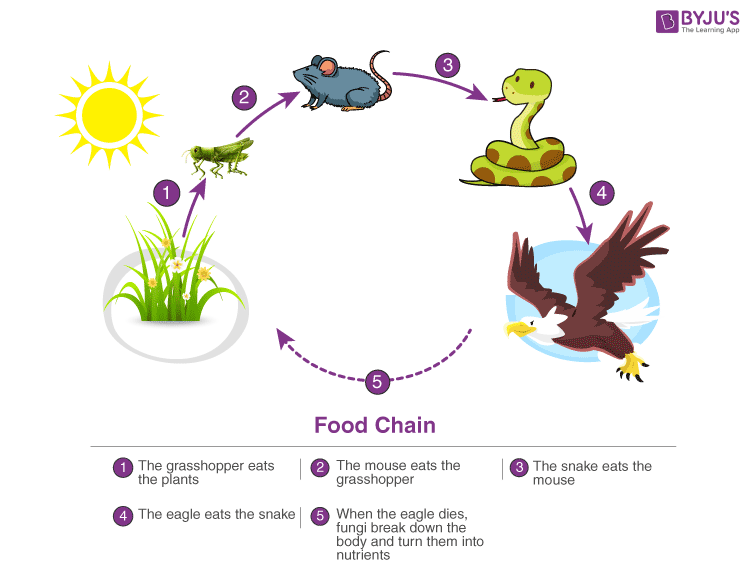
During this biological process, light energy is converted into chemical energy and is passed on through successive trophic levels. The flow of energy from a producer, to a consumer and eventually, to an apex predator or a detritivore is called the food chain.
Dead and decaying matter, along with organic debris, is broken down into its constituents by scavengers. The reducers then absorb these constituents. After gaining the energy, the reducers liberate molecules to the environment, which can be utilised again by the producers.
2. Ecological Pyramids
An ecological pyramid is the graphical representation of the number, energy, and biomass of the successive trophic levels of an ecosystem. Charles Elton was the first ecologist to describe the ecological pyramid and its principals in 1927.
The biomass, number, and energy of organisms ranging from the producer level to the consumer level are represented in the form of a pyramid; hence, it is known as the ecological pyramid.
The base of the ecological pyramid comprises the producers, followed by primary and secondary consumers. The tertiary consumers hold the apex. In some food chains, the quaternary consumers are at the very apex of the food chain.
The producers generally outnumber the primary consumers and similarly, the primary consumers outnumber the secondary consumers. And lastly, apex predators also follow the same trend as the other consumers; wherein, their numbers are considerably lower than the secondary consumers.
For example, Grasshoppers feed on crops such as cotton and wheat, which are plentiful. These grasshoppers are then preyed upon by common mouse, which are comparatively less in number. The mice are preyed upon by snakes such as cobras. Snakes are ultimately preyed on by apex predators such as the brown snake eagle.
In essence:
Grasshopper →Mouse→ Cobra → Brown Snake Eagle
3. Food Web
Food web is a network of interconnected food chains. It comprises all the food chains within a single ecosystem. It helps in understanding that plants lay the foundation of all the food chains. In a marine environment, phytoplankton forms the primary producer.
To learn more about what is an ecosystem, its structure, types, components, and functions, register at BYJU’S website or download the BYJU’S app.
54,763
Ecosystem
Ecosystem Definition
An ecosystem is a system consisting of biotic and abiotic components that function together as a unit. The biotic components include all the living things whereas the abiotic components are the non-living things. Thus, an ecosystem science definition entails an ecological community consisting of different populations of organisms that live together in a particular habitat. Natural sciences like ecology and geography define an ecosystem as a geographic area where organisms, weather, and landscape, work together to form a “bubble of life”. (Ref. 1)
How about in biology, what is an ecosystem? In essence, the ecosystem definition in biology is that it acts as the fundamental unit of nature. (Ref. 2) Just as a living organism is made up of cells that act as the structural and functional units of life, nature also consists of fundamental units called ecosystems.
What is a simple definition of an ecosystem? An ecosystem is a community plus the environment. Ecology, which is the scientific study of the interactions between populations or between organisms and the environment, can be viewed at the level of an individual, a population, a community, or an ecosystem.
Ecology at the level of individuals is concerned chiefly with the individual organism’s physiology, reproduction, and development. At the level of population, ecology deals primarily with the attributes and the various factors affecting the population. At the level of community, ecology studies the interactions between populations and community patterns. At the level of an ecosystem, ecology puts all of them together to understand how the system operates as a unit. Thus, an ecosystem ecology would be more concerned about energy flow and nutrient cycles than about individual species. (Ref. 3)
Etymologically, the ecosystem meaning and origin can be traced back to the Ancient Greek “οἶκος” (“oîkos”) for “house” and “σύστημα” (“sústēma”) for “organized body”. The term was coined in the early 1930s by the botanist, Roy Clapham, to denote the physical and biological components of an environment. However, it was the British Ecologist, Arthur Tansley, who first introduced the concept in his paper entitled “The Use and Abuse of Vegetational Concepts”. (Ref. 4, 5)
Synonyms: environs; ecological community.
Ecosystem Structure
The structure of an ecosystem consists of two major components:
(1) biotic components
(2) abiotic components
Two components of the ecosystem: Biotic and Abiotic
(1) Biotic components
The biotic components include all the living things. Basically, there are two major types of living things. They are the eukaryotesand the prokaryotes. Eukaryotes are characterized by having membrane-bound organelles (such as a nucleus) inside their cells. The prokaryotes, in turn, are those lacking membrane- bound organelles. For further differences between these two groups, read this). Examples of eukaryotes are plants, animals, fungi, and protists. Bacteria and archaea represent the prokaryotes. Now, each of them has a “job” to do in the ecosystem.
Plants, for instance, have chloroplasts that enable them to harvest light energy. Then, they take carbon dioxide and water from their environment to convert them into sugar, a biomolecule that can be used to synthesize chemical energy (such as ATP). Because they are capable of producing their own food through photosynthesis, they are referred to as the producers. Next to the producers are the primary consumers. They feed on the producers while they serve as a food source to the higher levels of consumers (e.g. secondary and tertiary).
The animals are examples of consumers. The animals that feed on plants are called herbivoreswhereas those that feed on other animals are carnivores. Then, there are those that feed on both plants and animals. They are called omnivores.
(2) Abiotic components
The abiotic components include all the non-living things, such as rocks, soil, minerals, water sources, and the local atmosphere. Similar to biotic components, the abiotic components also have their ecological role. For example, elements and compounds serve as sources of nutrients. They are essential to the growth and metabolism of an organism. Apart from providing nutrients, they also provide organisms a place to live and thrive — a habitat.
Interactions
The biotic and the abiotic components interact with one another as a system and are linked to one another via nutrient cycles and energy flows. For instance, energy and nutrients enter the system via the photoautotrophs. They are organisms that carry out photosynthesis, such as plants and green algae. Then, the heterotrophs, for example, animals, feed on the photoautotrophs. This makes the energy and the nutrients move through the system. The death of these organisms incites decomposition by the decomposers. This process releases the nutrients back to the environment to be re-used by the organisms. To learn more about this, proceed to: Processes of the Ecosystem.
The biotic and abiotic components can also serve as environmental (ecological) factors that affect the ecosystem. The biotic components whose biological activity creates an impact in the ecosystem are referred to as the biotic factors. The abiotic factors, in turn, include the non-living things and the physical aspects of an ecosystem, such as climate, temperature, and pH.
An example of a biotic factor is the extent of predation in an ecosystem. If there is an increase in the number of predators, predation activity would likely increase. This, in turn, could significantly lessen the population density of their prey. If their prey is a key species, meaning another group of organisms depends on them for survival, then the decline (or worse, the extinction) of these key species could also lead to the decline (or worse, the extinction) of the organisms relying upon them.
As for the abiotic factor, they can regulate the size or the density of a species population. For instance, acid rain, which is unusually acidic precipitation and has high levels of hydrogen ions, can produce detrimental effects to the soil (e.g. leaching) as well as to the plants and aquatic animals that are sensitive to low pH. Apart from pH, other abiotic factors are light, salinity, air, soil or substrate, and temperature.
Types of Ecosystems
What are the 4 types of ecosystems? The four types of ecosystems are terrestrial, freshwater, marine, and artificial. The first three occur naturally in various biomes. The last one is man-made. Ecosystems vary in size — from the micro-ecosystems (e.g. tree ecosystems) to the largest ecosystems such as ocean ecosystems.
(1) Terrestrial ecosystem
The terrestrial ecosystem is one that occurs on land. Examples of land-based ecosystems are forest ecosystems, grassland ecosystems, tundra ecosystems, and desert ecosystems.
A forest ecosystem is one that consists of various plants, particularly trees. Because of the abundance of plants that serve as producers, this ecosystem abounds in life. Not only plants but also animals are teeming in a forest. They are also a great source of fruits, wood, They also help maintain the earth’s temperature. They are also a major carbon sink. (Ref.6)
Grassland ecosystems are typically found in tropical or temperate regions. They are dominated by grasses. As such, the animals commonly found in this type of ecosystem are grazing animals, such as cattle, goats, and deer.
Tundra ecosystems are characterized as being treeless and snow-covered. The snow melts briefly in spring and summer, producing shallow ponds. During this time, lichens and flowering plants typically grow. Because of the ice that covers the land in the tundra, this type of ecosystem is important in regulating the earth’s temperature. It also serves as a water reservoir (in the form of ice or frost).
Desert ecosystems are the ones occurring in desert habitats. Deserts are typically arid and windy. Some of them contain sand dunes, others, mostly rock. Organisms in the desert are not as diverse as those in forests but they possess adaptations that make them suited to their environment. Plants that are commonly found in the desert are CAM plants, such as cacti. Desert animals include insects, reptiles, and birds. (Ref.7)
(2) Freshwater ecosystems
Freshwater ecosystems are the aquatic ecosystems that do not contain saltwater. They are home to algae, plankton, insects, amphibians, and fish. There are two major types: lentic and lotic ecosystems.
A lentic ecosystem refers to ecosystems in still waters. Examples include the following: ponds, puddles, and lakes. Lakes, in particular, may form zonation. That is when it becomes very well established that different zones are formed. These zones are as follows: littoral, limnetic, and profundal. The littoral zone is the part that is near the shore. Here, light can penetrate up to the bottom. The limnetic zone is the zone in which light does not completely penetrate through. The part of the limnetic zone that is penetrated by light is the photic zone whereas the zone in which light cannot penetrate through, and therefore is dark, is the benthic zone. The plants and animals vary in these zones. For instance, rooted plants are found in the littoral zone but not in the limnetic zone. Rather, freely-floating plants are the ones commonly seen on the surface of the limnetic zone.
A lotic ecosystem is an aquatic ecosystem characterized by a freshwater habitat that is freely flowing. That is as opposed to the lentic that is nearly stationary. Examples include rivers and streams. Many plants and animals in these ecosystems have adaptations to help them cope with the force and the different conditions that running water brings.
(3) Marine ecosystem
A marine ecosystem is an aquatic ecosystem that contains saltwater. Examples are the ecosystems in the seas and oceans. The ocean ecosystems, in particular, are an important source of atmospheric oxygen due to the vast population of autotrophic algae that release oxygen through photosynthesis. Marine ecosystems are regarded as the most abundant type of ecosystem in the world. ( Ref.7 )
(4) Artificial ecosystem
An artificial ecosystem is a man-made system, which can be further classified as terrestrial, freshwater, or marine. An example of an artificial ecosystem is a terrarium. Many man-made ecosystems are built for conservation purposes, aesthetics, and studying biology and ecology.
Processes of the Ecosystem
In an ecosystem, energy flows while materials are cycled. These two processes are linked and essential to the structure, function, and biodiversity of an ecosystem. Let’s take a look at the figure below to understand them further.
Figure 1: While some energy is stored in ATP others are released as heat. The heat, dissipated into the environment is lost in the system and cannot be recycled. This means the planet is an open system when it comes to energy. (Ref.3) Image Source: Maria Victoria Gonzaga of Biology Online.
Energy flow
In ecology, the term productivity refers to the rate of generation of biomass in an ecosystem. It is often expressed in units of mass per volume per unit of time, e.g. grams per square meter per day (g m−2 d−1). Productivity may be primary or secondary. Primary productivity refers to the productivity of the autotrophs, such as plants, whereas secondary productivity refers to that of the heterotrophs, such as animals. (Ref. 8)
The primary production of biomass is often attributed to plants and algae performing photosynthesis. That is because virtually all energy available to organisms starts out with them. (Ref. 3) Energy from the sun is captured by the chloroplasts (organelles containing chlorophyll, the green pigment) inside the cells of photoautotrophs. Inside the chloroplast, the light energy (in the form of photons) drives the conversion of inorganic substrates into energy reserves, like sugar molecules. In general, animals have no such pigments to capture light energy that will enable photosynthesis. Therefore, they have to rely on autotrophs and/or other heterotrophs for food.
Photosynthesis is a biological process through which plants manufacture their own food with the aid of light from the sun and from inorganic sources (e.g. carbon dioxide and water). They produce glucose molecules, for instance, that can be stored later as starch. The plants, in turn, serve as a food source for organisms that are incapable of producing their own food.
By feeding on these plants, the energy (as well as the nutrients) flows from the producer to the consumer. Then, it flows from one consumer to the next. Complex organic molecules in food, such as carbohydrates, fats, and proteins are rich sources of energy stored in their chemical bonds. In the presence of oxygen, glucose (a sugar molecule), for instance, is processed to synthesize chemical energy (ATP) via cellular respiration. Energy stored in food molecules is released through a series of oxidation reactions. Electrons are passed on from one molecule to another until it reaches the final electron acceptor, which is oxygen. As the food molecule is fully oxidized, the final byproduct is carbon dioxide, which is released, for example through transpiration in plant stomata and exhalation in breathing animals. In the absence of oxygen, cells carry out fermentation wherein glucose is broken down to generate ATP and produce lactic acid. In animals, the excess energy from dietary sources is stored in energy-rich molecules, such as glycogen and lipids.
Decomposers are the last group of organisms through which energy flows through. They consume the droppings and carcasses of all living things.
Look at the figure below. It shows a simple diagram of a food chain and the flow of energy and nutrients. It starts with the producers, such as plants, that manufacture food by capturing light energy from the sun. Energy flows next to the consumers, particularly the primary consumer (insects), the secondary consumer (frog), the tertiary consumer (snake), and lastly, to the quaternary consumer (eagle). Then, the droppings or the carcass of the eagle will be broken down by the decomposers.
Figure 2: a simple diagram of a food chain and the flow of energy and nutrients. Image Source: Maria Victoria Gonzaga of Biology Online.
Biogeochemical or nutrient cycling
Elements, such as carbon, nitrogen, or phosphorus, enter a living organism in different ways. One example is by plants directly taking them up from their physical environment, for example via roots absorbing elements available in the soil and gases entering through stomata. In animals, these elements enter via food consumption. Droppings and decaying organic matter are broken down by decomposers, ultimately releasing these elements for nutrient cycling, or for use by other living organisms. This ecological process in which decomposers break down organic matter by decomposers is called decomposition. In decomposition, these materials are neither lost nor destroyed and therefore the planet, in this regard, is a closed system. The elements will be cycled between biotic and abiotic states within the ecosystem. (Ref. 3)
Figure 3: This figure illustrates the various biogeochemical or nutrient cycling carried out by decomposers. Credit: Cavicchioli, R., et al. (2019) “Scientists’ warning to humanity: microorganisms and climate change”. Nature Reviews Microbiology, 17: 569–586. doi:10.1038/s41579-019-0222-5, CC BY-SA 4.0.
Community dynamics
Ecosystems are dynamic. Their composition and structure may change over time especially when a disturbance occurs. For example, a volcanic eruption is a natural disturbance that can create a new land that is open for colonization. Oftentimes, the first species to colonize a barren land are lichens. Eventually, their biological activities will alter the condition of the environment. This will make it less harsh and more habitable for new species. The progressive replacement of one dominant type of species or community by another is called succession. This succession will go on until a climax state is established, meaning the ecosystem has achieved stability and no further successions will occur unless another disturbance disrupts the ecological balance. For example, a massive flood wiped a previously stable community. The land will be open again for colonization. A succession in which the new land is colonized for the first time is referred to as primary succession whereas a succession in an area that was previously occupied by a community but was disturbed and replaced by recolonization is called secondary succession.
Take a look at the schematic diagram of succession below. You will notice that the process started as a barren land with bare rocks. The pioneer species, like lichens and moss, will grow on the rocks and will become the pioneer species. Then, the site is next colonized by grasses and herbaceous plants. Soon, trees will grow on this site when their seeds reach the site, for example by wind currents or by bird droppings containing undigested seeds.
Figure 4: Notice the progressive replacement of one dominant type of species or community. This is called ecological succession.
Function and biodiversity
Ecosystems are responsible for the cycling of nutrients and for allowing the flow of energy, such as from the sun to the biotic components. The various biological, physical, and chemical systems work together in maintaining the stability of these systems on earth. Biodiversity is essential for an ecosystem to function. Biodiversity refers to the biotic components. The more diverse the biotic components are, the “healthier” the ecosystem will be. That is because each species has an important role to play. The more diverse the species are, the greater is the chance that the ecosystem will persist and continue to function. High diversity in an ecosystem can help improve productivity and thereby stabilize the functioning of an ecosystem.
Examples of Ecosystem
Examples of ecosystems described here are the following:
Deciduous forest ecosystem
Savannah ecosystem
Coral reef ecosystem
Hot spring ecosystem
Micro-ecosystems
Deciduous forest ecosystem
Deciduous forest
A deciduous forest is dominated by trees that shed leaves seasonally and then regrow their leaves at the start of the new growing season. They shed leaves as an adaptive mechanism against the cold season in temperate regions or to the dry seasons of the subtropical and tropical regions. The dominant trees in mid-latitude are oaks, beeches, birches, chestnuts, aspens, elms, maples, and basswoods. (Ref. 9) In the Southern Hemisphere, the dominant tree is the genus Nothofagus (southern beeches). The animals commonly found are snakes, frogs, salamanders, turtles, nails, slugs, insects, spiders, birds (such as warblers, owls, woodpeckers, hawks, etc.), and mammals (such as mice, moles, chipmunks, rabbits, weasels, foxes, and deer). (Ref. 9)
Savannah ecosystem
Savannah
Savannahs are a mix of woodland and grassland ecosystems. The widely spaced, scattered canopy trees allow light to penetrate and reach the ground. Because of that, shrub and herbaceous layers dominated by grasses are able to grow abundantly as well. Thus, the animals commonly found here are the grazers, such as sheep, cattle, and goats. This type of ecosystem often serves as a transition zone between forest and desert or grassland.
Coral reef ecosystem
Coral reef
The coral reef is an ecosystem created by reef-building corals. The reefs are actually colonies of coral polyps, such as stony corals that live together in clusters. They are one of the most diverse ecosystems on earth. As such, they are referred to as the rainforests of the sea. Most of them are found at shallow depths in tropical waters. Some of the species that inhabit the reefs are mollusks, worms, crustaceans, echinoderms, sponges, tunicates, and fish.
Hot spring ecosystem
Yellowstone hot spring
A hot spring is a spring with water temperatures that are higher relative to its surroundings. The water that is coming out of the spring is heated geothermally, i.e. via the heat from the earth’s mantle. Because of the high temperature, it is one of the ecosystems that contain very few types of organisms. Thermophiles are organisms that can thrive at temperatures ranging from 45 to 80°C (113 and 176 °F). Some of these organisms are thermophilic amoeba (such as Naegleria fowleri and Acanthamoeba), thermophilic bacteria (e.g. Legionella), and various archaea.
Micro-ecosystems
A tree with a creeping fern (epiphyte)
Ecosystems confined to small or tiny spaces and yet defined by specific environmental factors are called micro-ecosystems. Let’s take a look at a tree ecosystem. A tree creates a small ecosystem where various kinds of organisms live. For example, a tree may harbor lichens and other epiphytes (arboreal plant), invertebrates (such as insects), amphibians, and other animals. The epiphytes, themselves, provide a habitat for other organisms, such as fungi, bacteria, and myxomycetes. (Ref. 10)
Primary production
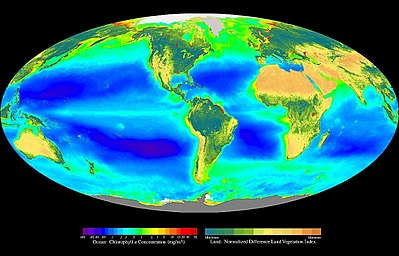
Global oceanic and terrestrial phototroph abundance, from September 1997 to August 2000. As an estimate of autotroph biomass, it is only a rough indicator of primary production potential and not an actual estimate of it.
Primary production is the production of organic matter from inorganic carbon sources. This mainly occurs through photosynthesis. The energy incorporated through this process supports life on earth, while the carbon makes up much of the organic matter in living and dead biomass, soil carbon and fossil fuels. It also drives the carbon cycle, which influences global climate via the greenhouse effect.
Through the process of photosynthesis, plants capture energy from light and use it to combine carbon dioxide and water to produce carbohydrates and oxygen. The photosynthesis carried out by all the plants in an ecosystem is called the gross primary production (GPP).[8]: 124 About half of the gross GPP is respired by plants in order to provide the energy that supports their growth and maintenance.[14]: 157 The remainder, that portion of GPP that is not used up by respiration, is known as the net primary production (NPP).[14]: 157 Total photosynthesis is limited by a range of environmental factors. These include the amount of light available, the amount of leaf area a plant has to capture light (shading by other plants is a major limitation of photosynthesis), the rate at which carbon dioxide can be supplied to the chloroplasts to support photosynthesis, the availability of water, and the availability of suitable temperatures for carrying out photosynthesis.[8]: 155
Energy and carbon enter ecosystems through photosynthesis, are incorporated into living tissue, transferred to other organisms that feed on the living and dead plant matter, and eventually released through respiration.[14]: 157 The carbon and energy incorporated into plant tissues (net primary production) is either consumed by animals while the plant is alive, or it remains uneaten when the plant tissue dies and becomes detritus. In terrestrial ecosystems, the vast majority of the net primary production ends up being broken down by decomposers. The remainder is consumed by animals while still alive and enters the plant-based trophic system. After plants and animals die, the organic matter contained in them enters the detritus-based trophic system.[15]
Ecosystem respiration is the sum of respiration by all living organisms (plants, animals, and decomposers) in the ecosystem.[16]Net ecosystem production is the difference between gross primary production (GPP) and ecosystem respiration.[17] In the absence of disturbance, net ecosystem production is equivalent to the net carbon accumulation in the ecosystem.
Energy can also be released from an ecosystem through disturbances such as wildfire or transferred to other ecosystems (e.g., from a forest to a stream to a lake) by erosion.
In aquatic systems, the proportion of plant biomass that gets consumed by herbivores is much higher than in terrestrial systems.[15] In trophic systems, photosynthetic organisms are the primary producers. The organisms that consume their tissues are called primary consumers or secondary producers—herbivores. Organisms which feed on microbes (bacteria and fungi) are termed microbivores. Animals that feed on primary consumers—carnivores—are secondary consumers. Each of these constitutes a trophic level.[15]
The sequence of consumption—from plant to herbivore, to carnivore—forms a food chain. Real systems are much more complex than this—organisms will generally feed on more than one form of food, and may feed at more than one trophic level. Carnivores may capture some prey that is part of a plant-based trophic system and others that are part of a detritus-based trophic system (a bird that feeds both on herbivorous grasshoppers and earthworms, which consume detritus). Real systems, with all these complexities, form food webs rather than food chains.[15]
The carbon and nutrients in dead organic matter are broken down by a group of processes known as decomposition. This releases nutrients that can then be re-used for plant and microbial production and returns carbon dioxide to the atmosphere (or water) where it can be used for photosynthesis. In the absence of decomposition, the dead organic matter would accumulate in an ecosystem, and nutrients and atmospheric carbon dioxide would be depleted.[18]: 183
Decomposition processes can be separated into three categories—leaching, fragmentation and chemical alteration of dead material. As water moves through dead organic matter, it dissolves and carries with it the water-soluble components. These are then taken up by organisms in the soil, react with mineral soil, or are transported beyond the confines of the ecosystem (and are considered lost to it).[19]: 271–280 Newly shed leaves and newly dead animals have high concentrations of water-soluble components and include sugars, amino acids and mineral nutrients. Leaching is more important in wet environments and less important in dry ones.[10]: 69–77
Fragmentation processes break organic material into smaller pieces, exposing new surfaces for colonization by microbes. Freshly shed leaf litter may be inaccessible due to an outer layer of cuticle or bark, and cell contents are protected by a cell wall. Newly dead animals may be covered by an exoskeleton. Fragmentation processes, which break through these protective layers, accelerate the rate of microbial decomposition.[18]: 184 Animals fragment detritus as they hunt for food, as does passage through the gut. Freeze-thaw cycles and cycles of wetting and drying also fragment dead material.[18]: 186
The chemical alteration of the dead organic matter is primarily achieved through bacterial and fungal action. Fungal hyphae produce enzymes that can break through the tough outer structures surrounding dead plant material. They also produce enzymes that break down lignin, which allows them access to both cell contents and the nitrogen in the lignin. Fungi can transfer carbon and nitrogen through their hyphal networks and thus, unlike bacteria, are not dependent solely on locally available resources.[18]: 186
Decomposition rates
Decomposition rates vary among ecosystems.[20] The rate of decomposition is governed by three sets of factors—the physical environment (temperature, moisture, and soil properties), the quantity and quality of the dead material available to decomposers, and the nature of the microbial community itself.[18]: 194 Temperature controls the rate of microbial respiration; the higher the temperature, the faster the microbial decomposition occurs. Temperature also affects soil moisture, which affects decomposition. Freeze-thaw cycles also affect decomposition—freezing temperatures kill soil microorganisms, which allows leaching to play a more important role in moving nutrients around. This can be especially important as the soil thaws in the spring, creating a pulse of nutrients that become available.[19]: 280
Decomposition rates are low under very wet or very dry conditions. Decomposition rates are highest in wet, moist conditions with adequate levels of oxygen. Wet soils tend to become deficient in oxygen (this is especially true in wetlands), which slows microbial growth. In dry soils, decomposition slows as well, but bacteria continue to grow (albeit at a slower rate) even after soils become too dry to support plant growth.[18]: 200
Ecosystems are dynamic entities. They are subject to periodic disturbances and are always in the process of recovering from past disturbances.[21]: 347 When a perturbation occurs, an ecosystem responds by moving away from its initial state. The tendency of an ecosystem to remain close to its equilibrium state, despite that disturbance, is termed its resistance. The capacity of a system to absorb disturbance and reorganize while undergoing change so as to retain essentially the same function, structure, identity, and feedbacks is termed its ecological resilience.[22][23] Resilience thinking also includes humanity as an integral part of the biosphere where we are dependent on ecosystem services for our survival and must build and maintain their natural capacities to withstand shocks and disturbances.[24] Time plays a central role over a wide range, for example, in the slow development of soil from bare rock and the faster recovery of a community from disturbance.[14]: 67
Disturbance also plays an important role in ecological processes. F. Stuart Chapin and coauthors define disturbance as "a relatively discrete event in time that removes plant biomass".[21]: 346 This can range from herbivore outbreaks, treefalls, fires, hurricanes, floods, glacial advances, to volcanic eruptions. Such disturbances can cause large changes in plant, animal and microbe populations, as well as soil organic matter content. Disturbance is followed by succession, a "directional change in ecosystem structure and functioning resulting from biotically driven changes in resource supply."[2]: 470
The frequency and severity of disturbance determine the way it affects ecosystem function. A major disturbance like a volcanic eruption or glacial advance and retreat leave behind soils that lack plants, animals or organic matter. Ecosystems that experience such disturbances undergo primary succession. A less severe disturbance like forest fires, hurricanes or cultivation result in secondary succession and a faster recovery.[21]: 348 More severe and more frequent disturbance result in longer recovery times.
From one year to another, ecosystems experience variation in their biotic and abiotic environments. A drought, a colder than usual winter, and a pest outbreak all are short-term variability in environmental conditions. Animal populations vary from year to year, building up during resource-rich periods and crashing as they overshoot their food supply. Longer-term changes also shape ecosystem processes. For example, the forests of eastern North America still show legacies of cultivation which ceased in 1850 when large areas were reverted to forests.[21]: 340 Another example is the methane production in eastern Siberian lakes that is controlled by organic matter which accumulated during the Pleistocene.[25]
Ecosystems continually exchange energy and carbon with the wider environment. Mineral nutrients, on the other hand, are mostly cycled back and forth between plants, animals, microbes and the soil. Most nitrogen enters ecosystems through biological nitrogen fixation, is deposited through precipitation, dust, gases or is applied as fertilizer.[19]: 266 Most terrestrial ecosystems are nitrogen-limited in the short term making nitrogen cycling an important control on ecosystem production.[19]: 289 Over the long term, phosphorus availability can also be critical.[26]
Macronutrients which are required by all plants in large quantities include the primary nutrients (which are most limiting as they are used in largest amounts): Nitrogen, phosphorus, potassium.[27]: 231 Secondary major nutrients (less often limiting) include: Calcium, magnesium, sulfur. Micronutrients required by all plants in small quantities include boron, chloride, copper, iron, manganese, molybdenum, zinc. Finally, there are also beneficial nutrients which may be required by certain plants or by plants under specific environmental conditions: aluminum, cobalt, iodine, nickel, selenium, silicon, sodium, vanadium.[27]: 231
Until modern times, nitrogen fixation was the major source of nitrogen for ecosystems. Nitrogen-fixing bacteria either live symbiotically with plants or live freely in the soil. The energetic cost is high for plants that support nitrogen-fixing symbionts—as much as 25% of gross primary production when measured in controlled conditions. Many members of the legume plant family support nitrogen-fixing symbionts. Some cyanobacteria are also capable of nitrogen fixation. These are phototrophs, which carry out photosynthesis. Like other nitrogen-fixing bacteria, they can either be free-living or have symbiotic relationships with plants.[21]: 360 Other sources of nitrogen include acid deposition produced through the combustion of fossil fuels, ammonia gas which evaporates from agricultural fields which have had fertilizers applied to them, and dust.[19]: 270 Anthropogenic nitrogen inputs account for about 80% of all nitrogen fluxes in ecosystems.[19]: 270
When plant tissues are shed or are eaten, the nitrogen in those tissues becomes available to animals and microbes. Microbial decomposition releases nitrogen compounds from dead organic matter in the soil, where plants, fungi, and bacteria compete for it. Some soil bacteria use organic nitrogen-containing compounds as a source of carbon, and release ammonium ions into the soil. This process is known as nitrogen mineralization. Others convert ammonium to nitrite and nitrate ions, a process known as nitrification. Nitric oxide and nitrous oxide are also produced during nitrification.[19]: 277 Under nitrogen-rich and oxygen-poor conditions, nitrates and nitrites are converted to nitrogen gas, a process known as denitrification.[19]: 281
Mycorrhizal fungi which are symbiotic with plant roots, use carbohydrates supplied by the plants and in return transfer phosphorus and nitrogen compounds back to the plant roots.[28][29] This is an important pathway of organic nitrogen transfer from dead organic matter to plants. This mechanism may contribute to more than 70 Tg of annually assimilated plant nitrogen, thereby playing a critical role in global nutrient cycling and ecosystem function.[29]
Phosphorus enters ecosystems through weathering. As ecosystems age this supply diminishes, making phosphorus-limitation more common in older landscapes (especially in the tropics).[19]: 287–290 Calcium and sulfur are also produced by weathering, but acid deposition is an important source of sulfur in many ecosystems. Although magnesium and manganese are produced by weathering, exchanges between soil organic matter and living cells account for a significant portion of ecosystem fluxes. Potassium is primarily cycled between living cells and soil organic matter.[19]: 291
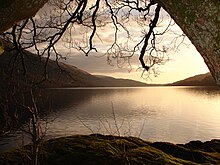
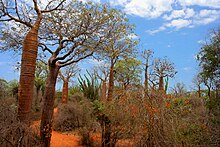
Loch Lomond in Scotland forms a relatively isolated ecosystem. The fish community of this lake has remained stable over a long period until a number of introductions in the 1970s restructured its food web.[30]Spiny forest at Ifaty, Madagascar, featuring various Adansonia (baobab) species, Alluaudia procera (Madagascar ocotillo) and other vegetation
Biodiversity plays an important role in ecosystem functioning.[31]: 449–453 Ecosystem processes are driven by the species in an ecosystem, the nature of the individual species, and the relative abundance of organisms among these species. Ecosystem processes are the net effect of the actions of individual organisms as they interact with their environment. Ecological theory suggests that in order to coexist, species must have some level of limiting similarity—they must be different from one another in some fundamental way, otherwise, one species would competitively exclude the other.[32] Despite this, the cumulative effect of additional species in an ecosystem is not linear: additional species may enhance nitrogen retention, for example. However, beyond some level of species richness,[11]: 331 additional species may have little additive effect unless they differ substantially from species already present.[11]: 324 This is the case for example for exotic species.[11]: 321
The addition (or loss) of species that are ecologically similar to those already present in an ecosystem tends to only have a small effect on ecosystem function. Ecologically distinct species, on the other hand, have a much larger effect. Similarly, dominant species have a large effect on ecosystem function, while rare species tend to have a small effect. Keystone species tend to have an effect on ecosystem function that is disproportionate to their abundance in an ecosystem.[11]: 324
Ecosystem diversity is the variety of ecosystems in a given place. An ecosystem is a community of organisms and their physical environment interacting together. For food, shelter, growth and development, all life systems interact with the environment. This is why it is necessary to preserve the ecosystems.
Scales of Ecosystems
Ecosystems come in indefinite sizes. It can exist in a small area such as underneath a rock, a decaying tree trunk, or a pond in your village, or it can exist in large forms such as an entire rain forest. Technically, the Earth can be called a huge ecosystem.
Ecosystems can be classified into three main scales. Micro: A small scale ecosystem such as a pond, puddle, tree trunk, under a rock etc. Messo: A medium scale ecosystem such as a forest or a large lake. Biome: A very large ecosystem or collection of ecosystems with similar biotic and abiotic factors such as an entire Rainforest with millions of animals and trees, with many different water bodies running through them.
Links Between Ecosystems And Human Activities
We’ve managed to control fire, practice agriculture, and build transportation vehicles. We’ve built factories, dams, solar panels and we’re constantly finding new ways of exploring space. Still, the human race’s thirst to use, modify and transform natural ecosystems seems endless. For instance, when we transform a plain to grow cereal fields, we’re significantly modifying that local ecosystem. Sometimes, we even end up completely changing it from its original foundations.
Today, human activities have such an impact on ecosystems that we now speak of the Anthropocene timeline. This is a period that defines the significant human impact of human activities on the Earth’s atmospheric, biospheric, geologic and hydrologic systems. This period in time also considers changes happening due to climate change events, which is also mainly caused by human activities. We can see all these changes everywhere. When trees are taken down in the Amazonian forest, the ecosystems change as species struggle to survive and the local humidity and the climate both change. As well, building a dam also changes the distribution of water and affects the species living along the river’s course.
An example often used about how human activities affect ecosystems is the US Yellowstone National Park. Here, as in other national parks, the U.S. Biological Survey decided to kill wolfs and other species as a predator control measure. The problem was that the disappearance of the wolf population affected all the ecosystem in the long run, even changing the course of the local river. The wolf was later reintroduced in the Park, around 70 years later, in an attempt to restore the balance of the ecosystem. Check out the whole story on this video:
Why Is Preserving Ecosystems Important?
Like all other living beings, humans are dependant on natural ecosystem services to survive. We need it to get the food we eat, the water we drink and to transform raw materials into our everyday products. So in order to keep our living conditions, it’s truly important that we preserve natural ecosystems.
For example, the agriculture that provides our food depends on the characteristics of a specific ecosystem. Cereals or vegetables grow only under certain conditions of temperature and humidity. They also need certain natural processes, such as pollination, to take place. If we change these characteristics too intensely, there is the risk that we aren’t able to produce what we produce today, or at least not in the same way. That’s why there are some agricultural techniques that understand and manage food production (such as agroforestry, permaculture or regenerative agriculture) that the wider impacts of using herbicides, pesticides, exhausting nearby water sources or betting on different types of trees that make ecosystems more resilient.
According to FAO, ecosystem services, worth USD $125 trillion, “make human life possible by, for instance, providing nutritious food and clean water, regulating disease and climate, supporting the pollination of crops and soil formation, and providing recreational, cultural and spiritual benefits.”
For all these to be possible, Earth’s ecosystems like forest ecosystems, grassland ecosystems, aquatic ecosystems or agroecosystems need to properly function. But the fact is that some ecosystem services are currently under threat.
Ecosystem Services: Examples
Without ecosystem services, life on Earth as we know it wouldn’t exist. There are four main categories of ecosystem services:
Provisioning services refer to the products secured by ecosystems. These include:
• Water
• Food (including cattle and seafood)
• Pharmaceuticals, biochemicals, and industrial products
• Energy (sunlight, hydropower, biomass)
Regulating services are the ecosystem services that allow the regulation of ecosystem processes such as:
• Climate regulation (and carbon absorption and storage via the oceans, trees, soil)
• Waste decomposition (one of the most essential microbial process happening in soil)
• Crop pollination (performed by agents such as bees that contribute to the reproduction of flowering plants)
• Water and air purification and regulation
• Control of pests and diseases
Supporting and habitat services refer to the ability of ecosystems to give habitat for migratory species and to support the viability of gene-pools.This is possible thanks to:
• Primary reproduction
• Nutrient and seed dispersal
Cultural services are the benefits ecosystem services bring to humans. Examples of these are:
• Inspiration for intellectual (creativity), cultural (entertainment) and spiritual (why) purposes
– Remember how it feels good to seeing and hearing wild birds
– Animals, plants and even the funghi kingdom serve as inspiration in theaters, movies…
– Many people go to natural sites when they want to be alone or reflect about life
• Recreational experiences such as outdoors activities or ecotourism
• Scientific discovery and optimization/efficiency by following examples of the natural world (biomimicry)
Learn more about ecosystem services, how natural resources are being overexploited, how the environment is being damaged and how to protect ecosystem services for the future generations:
How Do Humans Affect Ecosystems? The Human Impact On Ecosystems
Human activities are having a negative impact on ecosystems. In fact, according to the famous Millennium Ecosystems Assessment, at the beginning of the 20th century, human activities changed ecosystems more rapidly than ever before.
Humaking has been demanding for food, water, food, timber, and other materials like crazy. And all these demands have been highly contributing to deforestation (to grow more crops), the loss of natural pollination (bees are disappearing), water pollution (from animal excreta and pesticides to plastic), soil exploitation (due to intensive agriculture), overfishing and huge biodiversity loss. But why are humans affecting ecosystems this much?
Why Are Humans Affecting Ecosystems?
There is no straight-forward answer to this question. But human activities have impacts that aren’t instantaneously noticed. This means the visual impact of these effects isn’t there most of the time. As well, the ecological capital is hard to measure.
For instance, transforming land to build a hotel will have specific costs (buying the land, construction materials, manpower) and the revenue can be predicted via estimation of occupancy rate, price per season… But there’s no precise way to quantify what’s the value of that park and those trees that will need to be taken down to build it. What is its value for the environment? And for the families that go there every day? There’s no exact way of answering this, although organizations such as the European Parliament are trying to shed light on this issue.
Apart from the need to use ecosystems services at a large scale to keep the economy rolling, there’s also another very discussed theory on this issue. It says that if an ecosystem service is common and belongs to no one in particular, humans will exploit it until they exhaust it. This theory where individuals pursue their individual interests is called the tragedy of the commons. Find more info about it in our sustainable development definition.
Ecosystems Expanded To Human Environments
Generally speaking, we need to have a more rational approach regarding how we’re transforming ecosystems. We need to rethink the processes by which we change, take, use and get disposed of natural resources. They need to become more efficient and circular so that ecosystems can be better preserved. Only by restoring a more harmonious and lasting cohabitation with natural habitats and their living population we’ll be able to benefit from the Earth services. These are especially important to humankind’s survival on what concerns:
Supply: water, food, materials, energy resources, pharmacopoeia…
Regulation: climate, water cycles, bio-ecological cycles, atmospheric stability (oxygen production) and geological…
Ecosystems And Corporate Social Responsibility
To try and restore the health of ecosystems and their balance, our consumption and extraction processes will need to become more efficient and circular. For this, it is crucial that companies develop sustainability and CSR strategies– that they assess their impact and act upon it. Governments need to create better regulations to encourage companies to follow this path, while at the same time, find ways to measure and include the natural capital in the most famous way (not necessarily a good or fair one) of accessing progress: GDP.
Equilibrium and disturbance
Equilibrium is the steady state of an ecosystem, in which its composition and identity remain generally constant despite fluctuations in physical conditions and the makeup of the biotic community. Ecosystems may be knocked out of equilibrium by disturbances, disruptive events that affect their composition.
Some disturbances are a result of natural processes. For example, fire is a disturbance that can be caused by lightning in a prairie or forest ecosystem. Other disturbances are the result of human activities. Examples include acid rainfall, deforestation, algal blooms, and the introduction of invasive species.
Different ecosystems may respond differently to the same disturbance; one may recover rapidly, and another may recover more slowly—or not at all.
Resistance and resilience
Ecologists sometimes use two parameters to describe how an ecosystem responds to disturbance. These parameters are resistance and resilience. The ability of an ecosystem to remain at equilibrium in spite of disturbances is called resistance. How readily an ecosystem returns to equilibrium after being disturbed is called resilience. Some ecologists consider resistance to be an element of resilience—one that acts on a short timescale4,5start superscript, 4, comma, 5, end superscript.
Many ecologists think that the biodiversity of an ecosystem plays a key role in stability. For example, if there were just one plant species with a particular role in an ecosystem, a disturbance that harms that one species—say, a drought for a drought-sensitive species—might have a severe impact on the ecosystem as a whole. In contrast, if there were several plant species with similar functional roles, there would be a better chance of one of them being drought-tolerant and helping the ecosystem as a whole survive the drought period6start superscript, 6, end superscript.
Ecosystem resistance and resilience are important when we consider the effects of disturbances caused by human activity. If a disturbance is severe enough, it may change an ecosystem beyond the point of recovery—push the ecosystem into a zone where it is no longer resilient. A disturbance of this sort could lead to permanent alteration or loss of the ecosystem.
References
National Geographic Society. (2011, August 15). Ecosystem. National Geographic Society. https://www.nationalgeographic.org/encyclopedia/ecosystem/
Mathematics and 21st Century Biology. (2005). National Academies Press. https://doi.org/10.17226/11315
The Concept of the Ecosystem. (2017). Umich.Edu. https://globalchange.umich.edu/globalchange1/current/lectures/kling/ecosystem/ecosystem.html
Willis, A. J. (1997). “The ecosystem: an evolving concept viewed historically”, Functional Ecology 11:2, page 268-271.
Möller, D. (2020). Chemistry of the Climate System. Berlin Boston: De Gruyter.
Admin. (2018, March 13). Ecosystem. BYJUS; BYJU’S. https://byjus.com/biology/ecosystem/
10 Examples of a Natural Ecosystem. (2017). Sciencing. https://sciencing.com/10-examples-natural-ecosystem-7836.html
Wikipedia Contributors. (2020, July 31). Productivity (ecology). Wikipedia; Wikimedia Foundation. https://en.wikipedia.org/wiki/Productivity_(ecology)
Sydney E. Everhart; Joseph S. Ely; Harold W. Keller (2009). “Evaluation of tree canopy epiphytes and bark characteristics associated with the presence of corticolous myxomycetes” (PDF). Botany. 87 (5): 509–517.



 Ecosystem Definition






Comments
Post a Comment